

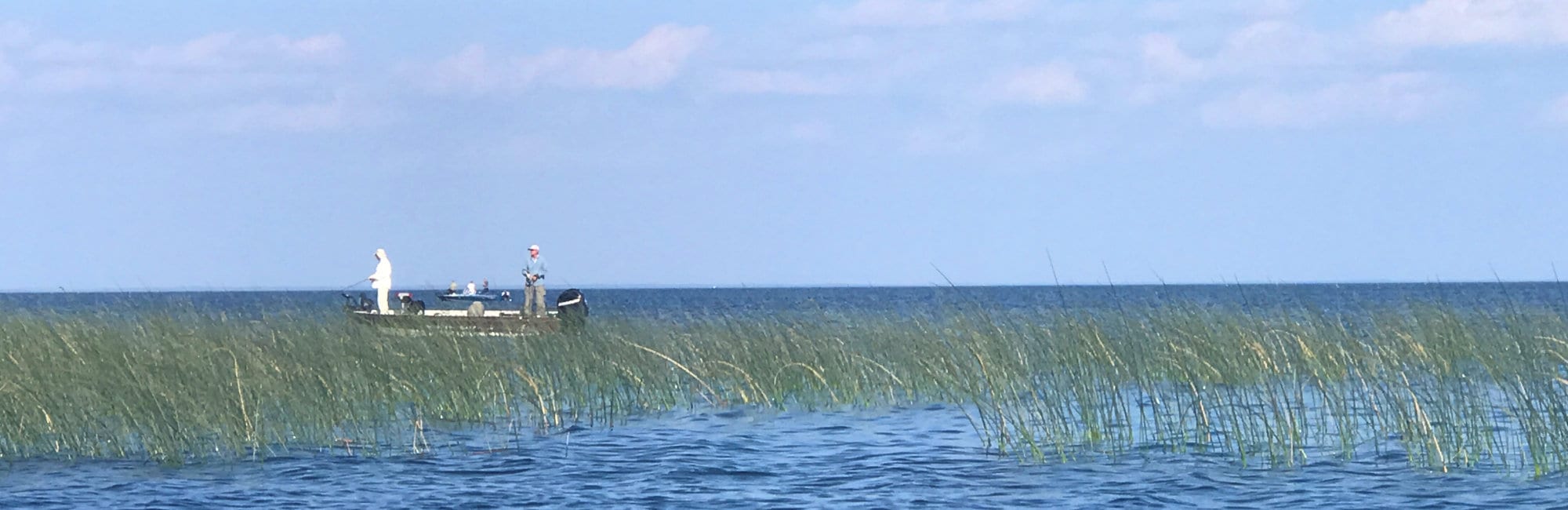
In-Fisherman: Muskie Time
Fishing Tips & Tricks from the In-Fisherman

Muskie Time
By In-Fisherman
In Minnesota, the best muskie bite is just beginning and lasts through September. When a period of hot, calm weather stirs up these brutes, it’s time to hit the water with a bucktail spinner.
Bucktails can be fished at various depths and speeds, but they’re most productive worked fast in shallow water. A bucktail worked fast remains easy for a muskie to catch, because it travels in a straight line. The best muskie lakes contain thousands of structural elements. Where do you start?
Shallow bays that serve as spawning sites are key muskie locations in early summer. Most muskies leave bays soon after spawning, but they hold close to weedbeds, reefs, and points that lie near shallow bays.
Rocky reefs and shoreline points near spawning areas are consistently productive, especially during classic muskie weather-hot, humid days that threaten rain or dreary days with drizzle. The more spots you try the more fish you’ll contact. As you move farther from spawning areas, the number of muskies per acre drops.
To evaluate the potential of a spot, consider it’s size. A reef the size of a house likely attracts more muskies than one the size of a car. The same is true for weedbeds. Reefs with diverse structural features generally hold more muskies than plain round reefs. With a contour map and this simple formula, you’ll never feel lost on an unfamiliar muskie lake. But whether you’re a muskie veteran or a novice, release those trophies to thrill another angler or to catch again another day.
Tips & Tricks Courtesy of In-Fisherman
7819 Highland Scenic Road
Baxter, MN 56425
218-829-1648