

In-Fisherman: Weedline Panfish
Fishing Tips & Tricks from the In-Fisherman

Weedline Panfish
By In-Fisherman
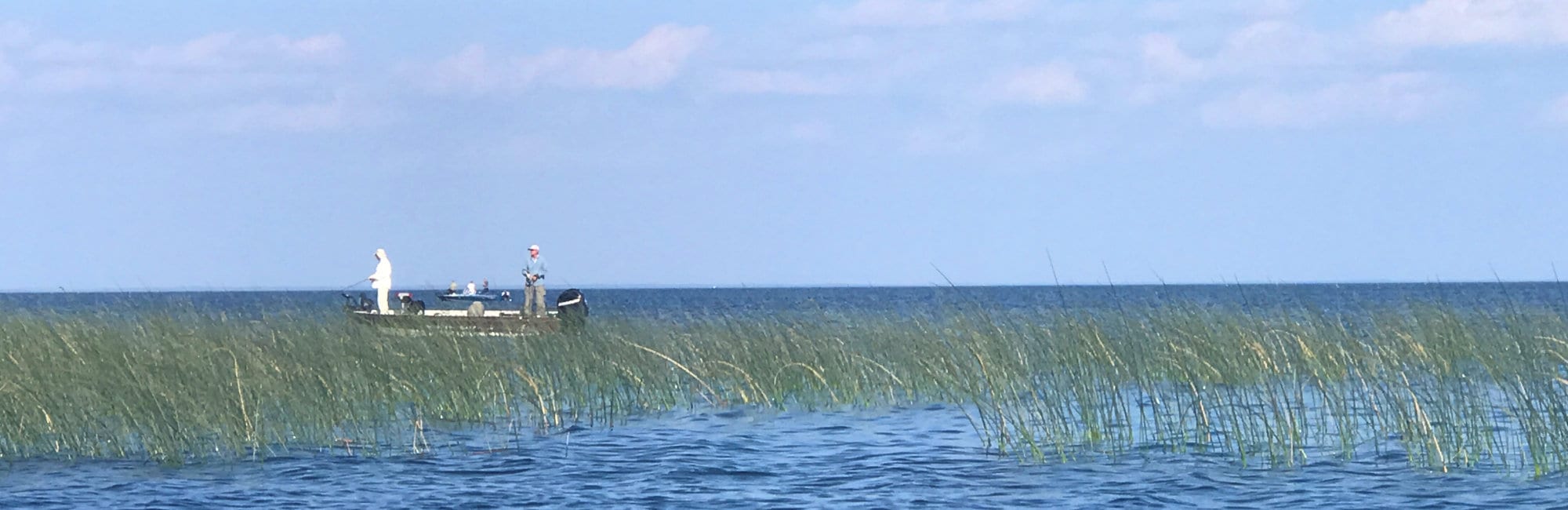
All summer, panfish bite on the endless weedline. Crappies, bluegills, sunfish, and perch gather at the deep edge. This pattern above all others is the easiest to identify and exploit, and it often produces large fish.
The key is to focus on the most fertile half of the main lake. Work the portion of the main basin with softer bottom and larger weed flats than the rest of the lake.
Once you identify the big picture, look for major structural elements within that area. The biggest panfish cruise the edge of major weed flats, huge weedy points, and submerged islands. They gather in cuts, pockets, and holes on the deep weedline or suspend nearby in open water.
To quickly locate concentrations of fish, drift or backtroll the edge with a small spinner rig. For bluegills and perch, tip the single hook with a worm, the light colored portion of a crawler split in half, or a small leech. Crappies and perch often seem to prefer a small minnow hooked through the lips.
Work your boat into dips and points in the weedline, looking for fingers of rock or gravel and other transition lines. Any irregularity becomes a sanctuary for invertebrates and a dining room for panfish.
When you find fish, anchor and cast small jigs. Use a 7-foot or even slightly longer light-action rod to catapult 1/60 to 1/32 ounce jigs on 2 to 3 pound test line. Small tubes and curly tails often are productive, though tipping with a maggot, a piece or worm, or a nick of crawfish usually is best.
When you can’t find fish, carry a selection of floats to probe for fish cruising high above deep weeds. Suspend the same tiny baited jigs into pockets and holes in the weeds.
When weed edges run deeper than 10 feet, work from the bow of the boat with a trolling motor while vertically jigging the same light jigs.
Tips & Tricks Courtesy of In-Fisherman
7819 Highland Scenic Road
Baxter, MN 56425
218-829-1648