

In-Fisherman: Summer Pike Patrol
Fishing Tips & Tricks from the In-Fisherman

Summer Pike Patrol
By In-Fisherman
In many places in North America, the pike is considered “the other fish,” a gamefish to go after in addition to a primary target like walleyes, bass, or lake trout. It’s often caught by accident while fishing for something else. Northern pike are Minnesota’s most common big gamefish, growing to over 20 pounds throughout the state. And many anglers go after pike on purpose, not only catching them consistently, but bagging the big ones.
Big pike are perhaps the most elusive North American freshwater gamefish. The pike’s sleek shape and sharp mouth combined with its stalking and hunting habits led Europeans to liken it to a long, spear-like wolf of the water.
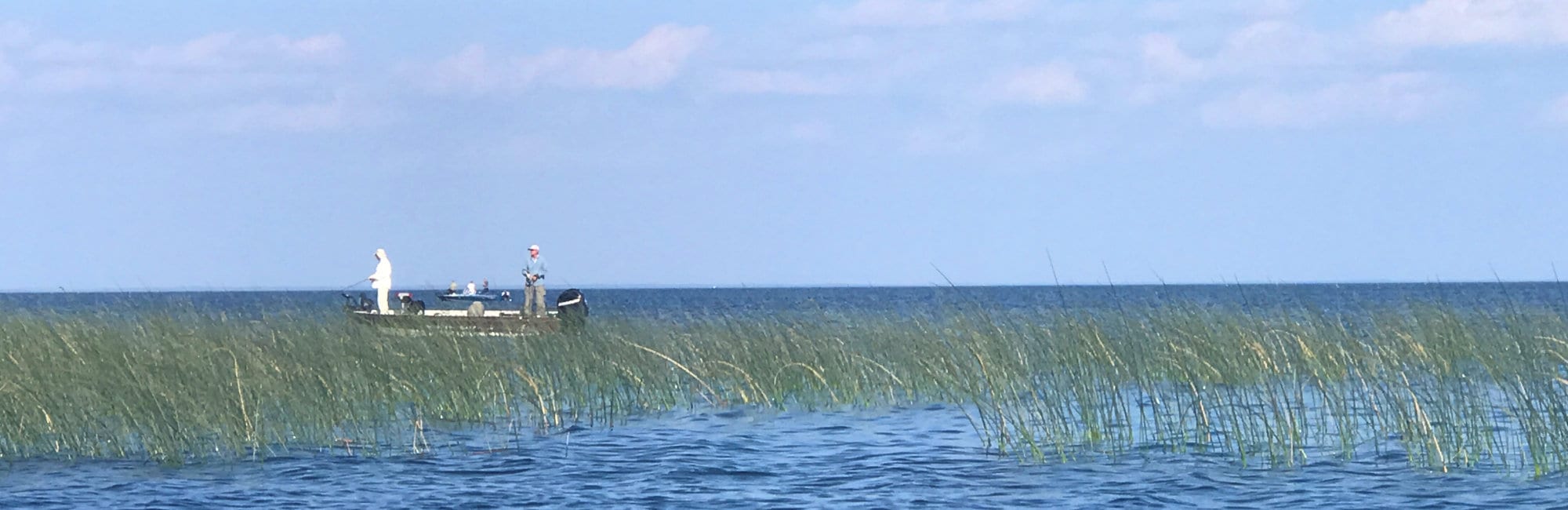
Once summer sets in, the outside weedline, which runs from 12 to 17 feet in clear lakes, is the focal point for pike activity in most natural lakes.
One simple and effective way to hook a lunker is to backtroll a jig tipped with a minnow. Keep your bait constantly in the fish zone. When a pike strikes, hooking it is easy. And this method often produces the bonus of a mixed-bag.
Dragging jigs usually works best in water at least 15 feet deep, which translates to a lot of line out. In 25 feet of water, that could be as much as 40 feet of line. Don’t let fish run. A slight pause and then a quick hard set are best. Pike often hook themselves on the strike. If you don’t get a good set or give to much slack line, pike often throw the lure with a head shake. So, to assure a solid set, use a relatively stiff rod and low-stretch line. Also keep constant pressure on the fish once it’s hooked.
A six-foot medium-heavy-action spinning rod with an open face spinning reel is best. Line weight can vary, but 10-pound test is my choice. It’s light so the jig swims naturally, but not heavy enough to spook fish in clear water. Tie on a flexible wire leader to prevent bite-offs.
Tips & Tricks Courtesy of In-Fisherman
7819 Highland Scenic Road
Baxter, MN 56425
218-829-1648